Bruksanvisning Vango F10 XPD 3 Tält

Behöver du en bruksanvisning för din Vango F10 XPD 3 Tält? Nedan kan du se och ladda ner PDF-bruksanvisningen gratis på svenska. Den här produkten har för närvarande 7 vanliga frågor, 0 kommentarer och har 0 röster. Om det här inte är bruksanvisningen du vill ha, vänligen kontakta oss.

Är produkten defekt och erbjuder bruksanvisningen ingen lösning? Gå till ett Repair Café för gratis reparationstjänster.

Bruksanvisning

Loading…
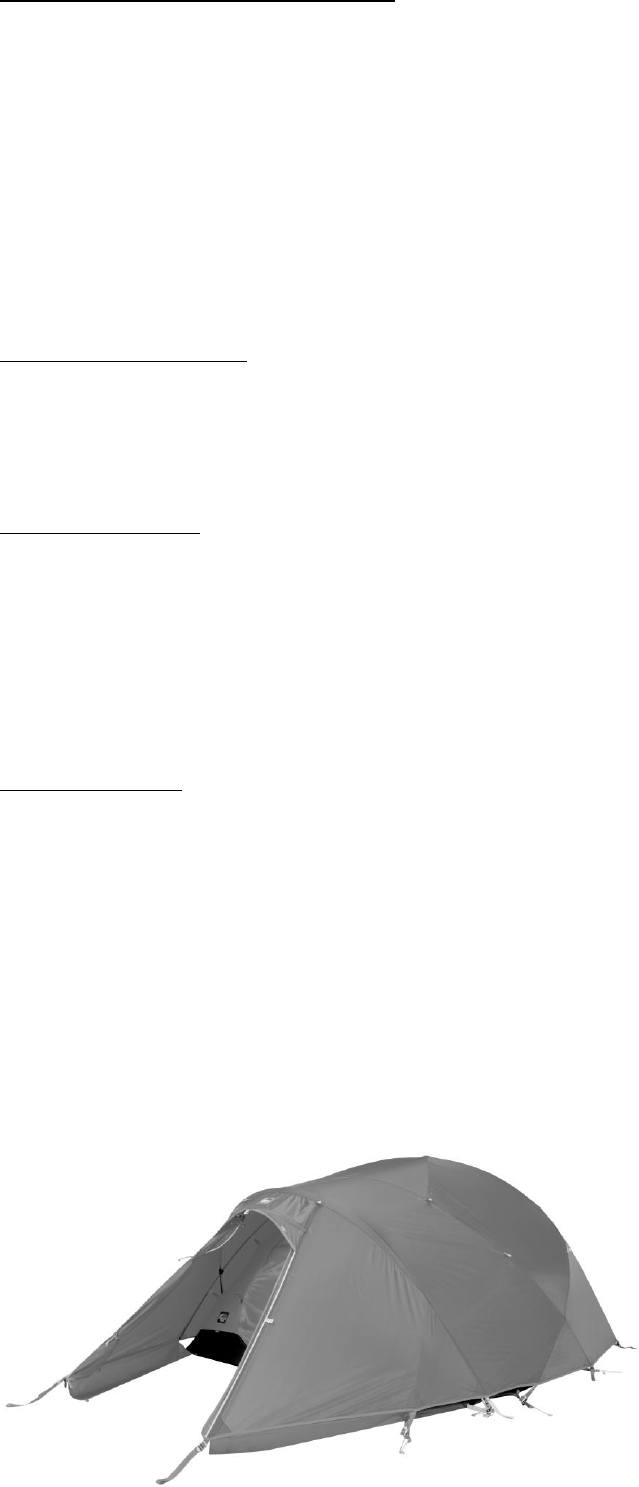
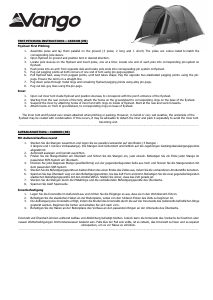
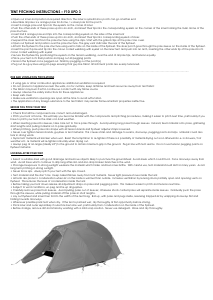
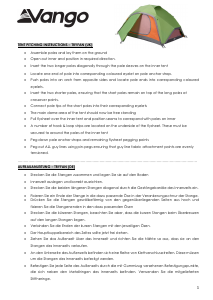
TENT PITCHING INSTRUCTIONS F10 XPD 3
Open out inner and position in required direction. The inner is symetrical so porch can go at either end
Assemble all poles: 4 x orange poles for dome, 1 x silver pole for the porch
Insert 2 orange pole end tips into the eyelets on the corner of inner
Push the other ends of these poles up into an arch, and insert their tips into the corresponding eyelets on the corners of the inner forming the main dome of the
pole structure.
Insert 2nd 2 orange pole end tips into the corresponding eyelets on the sides of the inner tent
• Push the other ends of these poles up into an arch, and insert their tips into corresponding eyelets of inner.
Suspend the inner tent from the pole structure using the clips. Start with the gated clips at the pole cross overs
• Open out flysheet and position over the pole structure. The grey vent indicates the rear of the flysheet.
Attach the flysheet to the pole structure using velcro tabs on the inside of the flysheet. The silver porch goes through the pole sleeve on the inside of the flysheet.
Insert the porch pole end tip into the colour coded webbing with eyelet on the inner tent and push into an arch, inserting the other ends tip of the pole into it's
colour coded webbing with eyelet
Secure the flysheet by positioning the eyelets on the tension webbing, over the end of all pole tips, and tension equally.
Place your tent in it's final position and peg out all pegging points
Tension the flysheet once pegged out. Finish by pegging out the porch(s)
Peg out ALL guy lines using pin-pegs ensuring that guy line fabric attachment points are evenly tensioned.
………………………………………………………………………………………………………………………………………………………………………………………….....
FIRE AND VENTILATION PRECAUTIONS
If using gas or other combustion appliances additional ventilation is required
Do not place hot appliances near the walls, roof or curtains, keep all flame and heat resources away from tent fabric
The fabric may burn if left in continuous contact with any flame source
Always observe the safety instructions for these appliances
Keep exits clear
Make sure ventilation openings are open all the time to avoid suffocation
The application of any foreign substance to the tent fabric may render flame-retardant properties ineffective.
BEFORE YOU PITCH YOUR TENT
Check that all the components are correct and undamaged.
Pitch your tent at home. This will help you become familiar with the components and pitching procedures, making it easier to pitch next time, particularly if you
have to pitch your tent in the dark or in bad weather.
When inserting poles into sleeves, take care not to force poles through. Avoid pushing long poles through sleeves. Instead, feed material onto poles, gathering
short lengths and pulling material on to poles gradually.
When pitching, push poles into shape with all tension bands and flysheet adjuster straps loosened.
Never over tighten tension bands, guylines or tent material. This causes strain and damage to seams, doorways, pegging points and zips. Material could also
tear in strong winds.
Nylon tent material will slacken when wet. Resist the temptation to re-tighten if there is a possibility of material drying out soon afterwards i.e. in showers / hot
weather etc. as material will re-tighten naturally when drying out.
Always peg at an angle (ideally 45º) to the ground to obtain maximum grip in the ground. Peg in line with tent seams. Do not over tension pegging points on
flysheet material.
LOOKING AFTER YOUR TENT
Select a suitable area with good drainage and remove objects likely to puncture the groundsheet. Avoid areas which could flood. Face doorways away from
wind. Avoid trees which continue to drip long after rain and also drop broken branches in the wind.
Prolonged exposure to strong sunlight weakens the material which fades and becomes brittle. With careful use, tent material should last for many years. Avoid
long term pitching in strong sunlight.
Never force zips. Always pitch your tent with the zips closed.
Tent material and fire don’t mix. Keep naked flames away from tent material. Never light pressure stoves inside the tent.
All tents are prone to condensation when air on the inside is warmer than outside. Increase ventilation by leaving doors partially open and opening vents on
flysheet. This reduces the level of condensation inside the tent.
Before taking your tent down release all adjustment straps on poles and pegging points. This makes it easier to pitch and tension next time.
Subject to wind conditions, un-peg and tie up all guylines.
Carefully remove poles from sleeves. Avoid pulling poles out of sleeves; otherwise shock corded poles will separate inside sleeves. Gradually push the poles
through the sleeves, while pulling material off the poles in short lengths.
Lay out flysheet and inner then fold to the width of the tent bag. Roll up, with poles and pegs inside, releasing trapped air by unzipping doorways first and
folding towards doorways.
Whenever possible pack tent when dry. If the tent is packed wet, dry thoroughly at first opportunity before storing.
Pack inner and outer separately if outer has become wet, particularly from condensation on the inside of the flysheet.
Before storage, remove dirt and stains by washing with a mild soap solution. Never use detergent. Rinse and dry thoroughly.
Ladda ner bruksanvisning i Engelska (PDF, 0.1 MB)
(Tänk på miljön och skriv endast ut denna bruksanvisning om det verkligen är nödvändigt)

Loading…

Betyg

Berätta vad du tycker om Vango F10 XPD 3 Tält genom att betygsätta den. Vill du dela med dig av dina åsikter om denna produkt eller ställa en fråga? Lämna en kommentar nederst på sidan.
Är du nöjd med Vango F10 XPD 3 Tält?
Ja Nej
Bli den första personen som betygsätter denna produkt
0 röster

Delta i konversationen om denna produkt

Här kan du dela vad du tycker om Vango F10 XPD 3 Tält. Om du har en fråga, läs först noggrant igenom manualen. Att begära en manual kan göras genom att använda vårt kontaktformulär.

Mer om denna bruksanvisning

Vi förstår att det är trevligt att ha en pappersbruksanvisning för din Vango F10 XPD 3 Tält. Du kan alltid ladda ner bruksanvisningen från vår hemsida och skriva ut den själv. Om du vill ha en originalbruksanvisning rekommenderar vi att du kontaktar Vango. De kanske kan tillhandahålla en originalbruksanvisning. Letar du efter bruksanvisningen för din Vango F10 XPD 3 Tält på ett annat språk? Välj ditt föredragna språk på vår hemsida och sök efter modellnumret för att se om vi har det tillgängligt.

Specifikationer

Märke Vango
Modell F10 XPD 3
Kategori Tält
Filtyp PDF
Filstorlek 0.1 MB

Alla bruksanvisningar för Vango Tält
Fler bruksanvisningar för Tält

Vanliga frågor om Vango F10 XPD 3 Tält

Vårt supportteam söker efter användbar produktinformation och svar på vanliga frågor. Om du hittar en felaktighet bland våra vanliga frågor uppskattar vi om du meddelar oss detta via vårt kontaktformulär.

Kan jag lagra mitt tält när det är vått? Verifierad

Endast under mycket korta perioder. När ett tält lagras i vått tillstånd i en vecka eller längre kan det bli mögligt. Detta är skadligt för ditt tält och eventuellt din hälsa.

Detta hjälpte (515) Läs mer

Hur impregnerar jag ett tält? Verifierad

Sätt upp tältet, rengör trasan och låt den torka. Applicera impregneringsmedlet på duken med en växtspruta eller annan spray. Det är också möjligt att använda en målarulle eller pensel. Duken måste vara helt mättad med impregneringsmedlet. Behandla också tältets insida. Rengör fönster noggrant med en fuktig trasa. Låt inte impregneringsmedlet torka på det. Låt tältduken torka helt. Upprepa behandlingen om det behövs.

Detta hjälpte (409) Läs mer

Kan jag reparera ett tår eller hål i tältets duk själv? Verifierad

Det finns speciella bitar av självhäftande tyglappar tillgängliga för syntetiska tygdukar. Stick en av dessa fläckar på båda sidor av hålet eller riv. För tygdukar av bomull eller tygdukar av blandat material är det bäst att använda lappar som kan strykas på. Detta kräver strykjärn.

Detta hjälpte (264) Läs mer

Dragkedjan i mitt tält går inte smidigt, vad kan jag göra? Verifierad

När en blixtlås går smidigt, använd en torr PTFE-spray eller silikonspray. Spraya inte på trasan och spray förebyggande för att undvika framtida problem.

Detta hjälpte (207) Läs mer

Vilka tältpinnar är bäst att använda för vilka ytor? Verifierad

På gräsmark- eller skogsytor kan du använda halvcirkelformiga eller plastpinnar. På steniga ytor måste du använda stenpinnar. På leraytor kan du använda halvcirkelformade, plastiska eller universella pinnar. På grusytor behöver du halvcirkelformiga eller universalpinnar och på sand måste du använda träpinnar.

Detta hjälpte (196) Läs mer

Det finns vattendroppar på insidan av tältet, betyder det att det läcker? Verifierad

Nej, det här är förmodligen kondens. Se till att tältet är ordentligt ventilerat för att hålla kondens på ett minimum.

Detta hjälpte (175) Läs mer

Impregneringsmedlet lämnar vita fläckar eller en vit dis på tältduken. Vad kan jag göra åt detta? Verifierad

Om agenten lämnar en vit dis eller vita fläckar på tältduken betyder det att du har applicerat mer impregneringsmedel på dessa områden. Detta är inte skadligt och fläckarna försvinner ofta med tiden. Det är inte tillrådligt att använda mindre impregneringsmedel för att förhindra fläckar. Duken måste vara helt mättad med impregneringsmedlet för att ge bra resultat.

Detta hjälpte (131) Läs mer
Bruksanvisning Vango F10 XPD 3 Tält

Relaterade produkter

Relaterade kategorier

×
Download